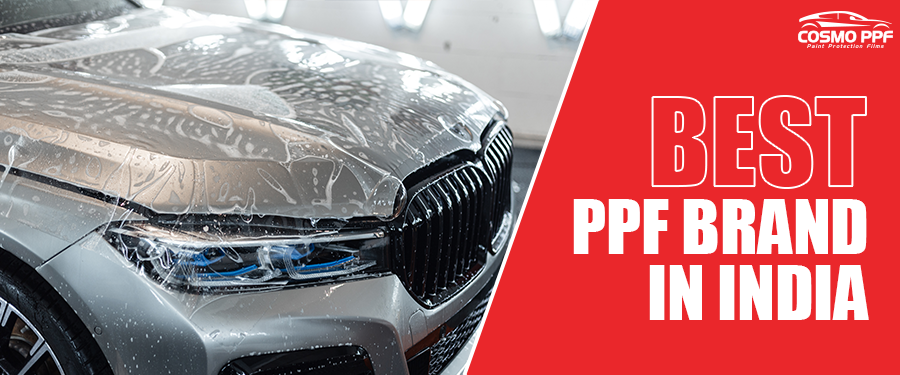
Best PPF Brand in India: How to Judge Before You Choose?
The best PPF brand is the one whose film, warranty and support hold up under the conditions your car actually faces. Paint protection film (PPF) is a transparent polyurethane layer applied over factory paint to guard against stone chips, scratches, stains and UV exposure. Because films can look identical once installed, the brand name on the roll says very little by itself. What separates one brand from another is material, construction, finish quality and the terms it stands behind. This guide sets out how to evaluate each of these, so first-time buyers and premium car owners can compare any PPF brand on the same footing.
Why a Brand Name Alone Does Not Decide the Outcome
Buyers often start with brand recognition, price and warranty length. These are useful signals, but each tells only part of the story. Two films can carry the same warranty period and still differ in clarity, self-healing response and how well the adhesive holds over time.
The ownership experience is shaped by three things working together: the film itself, how it is installed, and what the manufacturer commits to in writing. A strong brand gets all three right. A weak link in any one of them shows up later as lifting edges, haze, yellowing or a warranty claim that is hard to make.
What Makes a PPF Brand the Best?
Use the points below as a checklist when comparing brands.
- Material and Construction
PPF is made from thermoplastic polyurethane (TPU) or from lower-grade materials such as PVC. TPU PPF is the preferred choice among quality films because it is flexible, conforms well to curves and recovers after light abrasion. Ask which material the film uses and which layers it contains: the clear base, the adhesive and the topcoat.
- Topcoat and Self-Healing
The topcoat is the layer you touch and see. A good one resists staining from bird droppings, tree sap and road grime, and enables self-healing, where fine swirl marks and light scratches soften or disappear with heat from the sun or warm water. Self-healing has limits: it addresses surface marks, not deep cuts.
- Thickness, Understood Correctly
Thickness is measured in microns (or mils). A thicker film places more material between the paint and external impacts, and it contributes to the physical barrier. It does not tell the whole story, though. Impact performance also depends on the material, the construction and the formulation of the film. Look at what the added thickness is doing for the film overall, rather than choosing the highest number on the label.
- Optical Clarity and Yellowing Resistance
Good PPF should be close to invisible on day one and stay that way. Check for a clear, distortion-free finish and ask how the film is rated against yellowing and hazing. Clarity matters most on light-coloured cars and on gloss or matte finishes where any change is easy to see.
- Performance in Indian Conditions
Indian roads and climate put films through intense sun, heat, monsoon moisture, dust and uneven surfaces. Among PPF brands in India, a brand worth considering is built for these conditions, with UV stability, adhesive that tolerates heat and humidity, and a topcoat that cleans easily after dusty or wet drives.
- Warranty Terms
Warranty length is only the headline. Read what it covers, which typically includes yellowing, cracking, bubbling, peeling and delamination, and what it excludes. A clear, documented warranty tied to your specific vehicle and installation date is a mark of manufacturer confidence.
How to Verify a PPF Brand's Claims?
Claims on a brochure are easy to make and harder to check. These steps help you confirm what you are paying for.
- Confirm the film is genuine. Ask for the brand's authenticity details, such as roll identification or a warranty registration that links the film to your car.
- Get the warranty in writing. It should name the brand, the film variant, the coverage and the conditions.
- Check what is quoted. The quote should state the film and variant, the panels covered, surface preparation and warranty registration.
- Ask about installation practice. Pre-cut patterns or plotter-cut kits, wrapped edges where suitable, and a clean, dust-controlled bay all contribute to a clean result. Wrapped edges tuck the film behind the panel line, which protects the edge and avoids visible dirt lines.
- Inspect the finished car. Look for even edges, no trapped dust, no lifting and consistent clarity across panels in daylight.
A good installer will welcome these questions, and the best brands make them easy to answer.
How Cosmo PPF Measures Up?
Using the checklist above, here is how Cosmo PPF compares across its two core films. Cosmo PPF is developed by Cosmo First, a specialty films manufacturer, and sold across India.
Cosmo First is a global manufacturer of specialty films, with operations in India, Japan, Korea, Europe and the Americas. Its automotive protection solutions include paint protection films, window films, and coatings and compounds. This background matters to a buyer because PPF is a materials product: how it performs depends on film engineering, topcoat chemistry and adhesive quality, which are the core areas of a specialty films manufacturer.
|
Criterion |
Cosmo
PPF Platinum |
Cosmo
PPF Gold |
|
Material |
TPU |
[Confirm Gold material] |
|
Thickness |
210 microns |
[Confirm Gold thickness] |
|
Self-healing properties |
Yes |
Yes |
|
Finish options |
[Confirm Platinum finishes] |
Gloss, Matte and Black (coloured) |
|
Yellowing resistance |
[Confirm Platinum rating] |
Non-yellowing |
|
Warranty |
Lifetime |
Up to 5 years |
The specifications in the table are published by the manufacturer. For warranty terms specific to your vehicle, ask for the documented coverage when you book.
The Cosmo PPF Range

A good brand offers more than one answer, because buyers differ in budget, car and preference. The Cosmo PPF range is organised into clear tiers:
- Cosmo PPF Platinum: the flagship film, 210 microns thick, with a lifetime warranty. Suited to owners of premium and new cars who want the highest tier of coverage.
- Cosmo PPF Gold Plus: a TPU film with a seven-year warranty, for buyers who want strong protection with a mid-to-high tier commitment.
- Cosmo PPF Gold: durable, self-healing, non-yellowing protection with up to a five-year warranty, available in Gloss, Matte and Black (coloured PPF) variants through Gold, Gold Matte and Gold Black.
- Cosmo PPF Silver: an entry tier with a three-year warranty for buyers starting with PPF.
Which PPF Is Right for You?

The best PPF for cars depends on the individual car, how you use it and how long you plan to keep it.
- New car: PPF works best on fresh factory paint, because it preserves the finish from day one. Platinum or Gold Plus suit buyers who plan to keep the car for years.
- A car that is one to three years old: light wear may be present. Paint correction before installation lets the film cover clean paint.
- Older car: PPF will not repair existing damage, but it can protect the remaining finish and support resale value after paint correction.
- Finish preference: gloss keeps the factory look, matte changes the character of the paint, and coloured film offers a new look while still protecting.
- Coverage: front-end coverage (bonnet, bumper, fenders, mirrors) is a common starting point for highway driving, with full-body coverage for owners who want complete protection.
Caring for Your PPF
Wash with a pH-neutral shampoo and a soft microfibre mitt, and avoid abrasive pads and harsh chemicals. Follow the installer's cure-time guidance before the first wash. Regular, gentle washing keeps the topcoat performing as designed.
Conclusion
The best PPF brand is the one you can verify: a TPU film with a clear topcoat, honest specifications, a written warranty and an installation you can inspect. Compare any brand against the checklist in this guide and the right choice becomes clear.
To see how Cosmo PPF fits your car, request a quote on cosmoconsumer.com.
Best PPF In India Frequently Asked Questions
1. What is the best PPF brand in India?
There is no single best brand for every buyer; the best brand is the one that meets the material, clarity, warranty and support criteria above. Compare films on construction, topcoat, thickness in context, warranty coverage and installation quality rather than on brand name or price alone.
2. Is a more expensive PPF always better?
No, price reflects several factors and does not guarantee performance. Film material, finish, coverage area, vehicle size and installation work all affect cost. Compare what each quote includes before comparing totals.
3. Does a thicker PPF offer better protection?
Thickness contributes to the physical barrier, but it is not the only factor. Impact performance also depends on the film's material, construction and formulation.
4. How long does PPF last?
Lifespan depends on the film quality, exposure, care and installation. Manufacturer warranties give a documented guide to expected performance against yellowing, cracking and peeling.
5. Can PPF be removed without damaging the paint?
Yes, when removed professionally. Controlled heat and correct technique allow the film to be taken off cleanly, which is useful for replacement, bodywork or returning a leased vehicle.
6. Does PPF protect against all scratches and chips?
PPF significantly reduces damage from stone chips, light scratches and stains, but it does not make paint indestructible. Self-healing handles light surface marks, while deep cuts may need repair.
7. Should PPF be applied on a new car or an old car?
A new car gets the most benefit, but an older car can still be protected. Paint correction before installation gives the film a clean surface to cover.