Window Film
Cosmo Sunshield Window Films Guide: Types, VLT Law & Specs

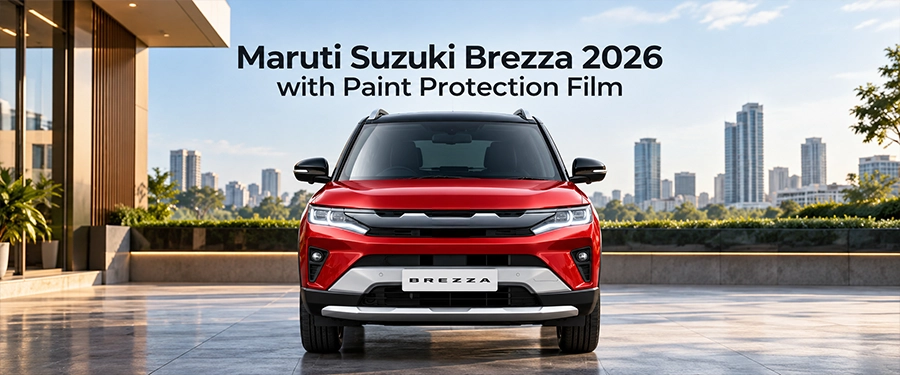
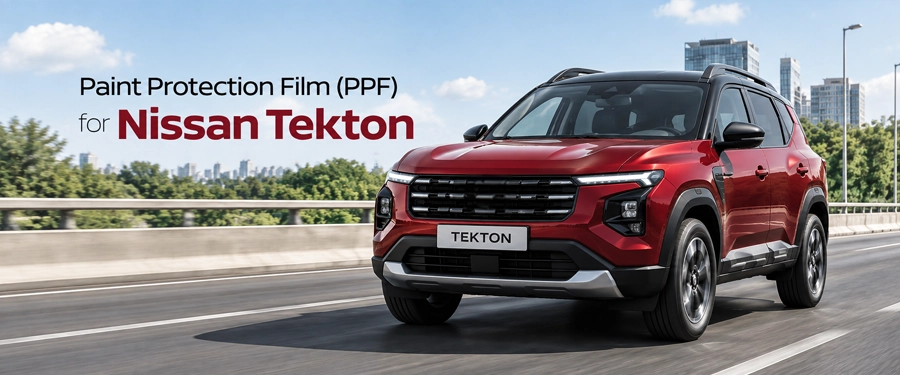
Paint Protection Film (PPF) pricing for popular Indian SUVs varies by vehicle size and coverage. Tentative 2026 estimates range from about ₹12,000 for high-impact areas on a Kia Sonet or Maruti Suzuki Brezza to over ₹1.12 lakh for full-body Cosmo PPF on a Kia Seltos, with the Tata Nexon and Hyundai Creta falling in between.
Indian roads rarely give a car's paint an easy life. Dust, gravel, stone chips, tight parking and long stretches of highway driving all take a toll on a factory finish long before a car shows its age in any other way. Bird droppings, tree sap and intense UV exposure add to the wear, and washing a car often enough to keep it spotless only invites swirl marks of its own.
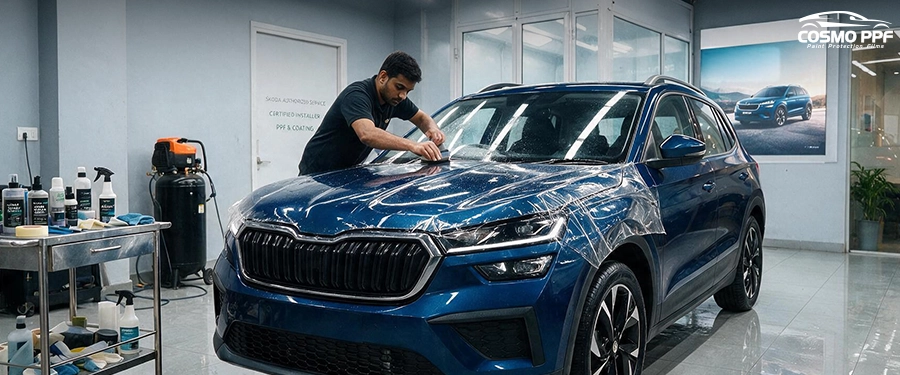
This is the gap Paint Protection Film (PPF) is built to close. A transparent, sacrificial layer goes over the paint so that road debris meets the film first, not the factory clear coat underneath. For owners of the Kia Sonet, Maruti Suzuki Brezza, Tata Nexon, Hyundai Creta and Kia Seltos, the question is rarely whether PPF works. It is how much coverage their specific car actually needs, and what that coverage costs.
This guide breaks down tentative 2026 PPF pricing for each of these five cars, explains what drives the difference between a front kit and full-body coverage, and covers where Cosmo PPF fits into that decision.
Table of Contents
1. Full-Body vs Full-Front vs Partial PPF
2. What Affects PPF Cost in India
3. How Does Cosmo PPF Work?
4. Why Full-Body PPF Costs More
5. Is PPF Worth It for Your Car?
6. TPU vs TPH vs PVC
7. Why Choose Cosmo PPF
8. Maintaining Your Car After PPF Installation
9. Final Verdict
10. FAQs
Note: all prices in this guide are tentative 2026 estimates for general guidance. They are not fixed Cosmo PPF quotations. Actual pricing depends on film grade, coverage, vehicle condition, installer and city. Get in touch with a certified Cosmo PPF installer for an exact quote.
Full-Body vs Full-Front vs Partial PPF: Which Coverage Do You Need?

Full-body PPF covers every painted panel and suits new-car owners and long-term buyers who want maximum protection. Full-front covers the bumper, bonnet, fenders and ORVMs for highway drivers who mainly face stone chips. Partial coverage protects specific high-impact spots for owners on a tighter budget.
Coverage boundaries can vary slightly between installers, so always confirm exactly which panels are included before comparing quotes. For a deeper breakdown of what each package covers panel by panel, see Cosmo's full-body vs partial PPF guide.
How Much Does PPF Cost in India? What Affects the Price

PPF cost in India depends on vehicle size, coverage, film grade and installation complexity, with no single price applying across every car. On Cosmo's own pricing, partial coverage starts around ₹15,000 while full-body protection can run from ₹60,000 to ₹3,00,000 or more depending on the vehicle and film grade chosen.
The main factors that move the final number:
How Does Cosmo PPF Work?
Cosmo PPF is built on thermoplastic polyurethane (TPU), a flexible material that conforms to curved panels while resisting UV rays, chemical stains and minor scratches. A self-healing topcoat reduces the appearance of light surface marks when exposed to heat, and a hydrophobic finish makes the car easier to keep clean.
Six properties do the work:
Why Does Full-Body PPF Cost More?
Car Full-body PPF costs more than a front kit because it needs significantly more film, more installation time and more careful edge finishing across every panel, not just the highest-impact ones. The gap between packages reflects real labour and material differences, not just a pricing tier.
When comparing quotes across installers, check exactly which panels are included rather than comparing the final number alone.
Is PPF Worth It for Your Car?
PPF is worth considering for owners who value preserving their car's factory finish, especially on new cars, dark-coloured vehicles, or cars that see frequent highway or heavy urban driving. It matters less for owners planning to sell soon or who rarely drive.
PPF tends to make sense if you:
Full-body coverage may not be necessary if you rarely drive, plan to sell the car soon, or mainly want protection for the areas most exposed to stone chips. In these cases, a front kit or targeted coverage is often the more practical choice.
TPU vs TPH vs PVC: Why Cosmo PPF Uses TPU
TPU outperforms TPH and PVC on flexibility, optical clarity and self-healing, which is why it's the material of choice for premium PPF like Cosmo PPF. TPH and PVC films can cost less but generally fall short on complex curves and long-term clarity.
|
Feature |
TPU |
TPH |
PVC |
|
Flexibility |
High |
Moderate |
Lower |
|
Complex curves |
Excellent |
Moderate |
Limited |
|
Self-healing |
Available |
Varies |
Generally limited |
|
Optical clarity |
High |
Varies |
Varies |
For the full material breakdown, see Cosmo's TPU vs TPH vs PVC guide.
Why Choose Cosmo Paint Protection Film (PPF)
Cosmo PPF is an Indian-manufactured, TPU-based film built on the legacy of Cosmo First, with Cosmo PPF Platinum as the flagship tier and Cosmo PPF Gold as the value-focused option. Both carry self-healing, hydrophobic, UV-resistant and non-yellowing properties engineered for Indian driving conditions.
Choose Platinum if long-term ownership and maximum warranty coverage matter most. Choose Gold if strong everyday protection at a lower entry cost is the priority.
Maintaining Your Car After PPF Installation
PPF needs a short settling period and simple ongoing care to hold its appearance long-term. Cosmo recommends curing for 24 to 72 hours and avoiding a wash for at least seven days after installation, followed by pH-neutral products for regular cleaning.
Final Verdict: Is PPF Worth It in India?
Indian driving conditions expose every car to stone chips, road debris, dust, traffic and parking damage, and PPF provides a physical layer that absorbs much of that everyday wear. The real question isn't whether PPF helps. It's how much coverage a specific car and driving pattern actually justify.
A predominantly city-driven Sonet or Brezza may be well served by a front kit. A Nexon or Creta that spends real time on highways may benefit from full-front coverage. A new Seltos that an owner plans to keep for years may justify full-body protection from day one. For all five, the right package comes down to vehicle size, driving conditions, ownership period and budget.
SUV Paint Protection Film (PPF) Cost in India FAQ's
1. What is Paint Protection Film?
Paint Protection Film is a transparent film applied over automotive paint to protect the surface from scratches, stone chips, stains and environmental contaminants.
2. Is full-body PPF better than a front kit?
Full-body PPF gives broader protection but costs more. A front kit is a practical choice for owners mainly concerned about stone chips on the bumper, bonnet and fenders.
3. Can PPF be applied to a used car?
Yes, though the vehicle should be inspected and prepared first. Existing paint defects may need correction before installation.
4. Can ceramic coating be applied over PPF?
Yes, a compatible ceramic coating such as Cosmo Guard can generally be layered over PPF for added hydrophobicity and easier cleaning.
5. How long after PPF installation can I wash my car?
Cosmo recommends waiting at least 7 days after installation before the first wash, following a 24 to 72 hour curing period.
6. Is PPF worth the cost?
For owners who want to preserve factory paint, drive frequently, use highways, or plan long-term ownership, PPF is generally worth considering. The right coverage level depends on budget and driving pattern.