Paint Protection Film
How to Choose the Best Paint Protection Film (PPF) for Your Car in India?

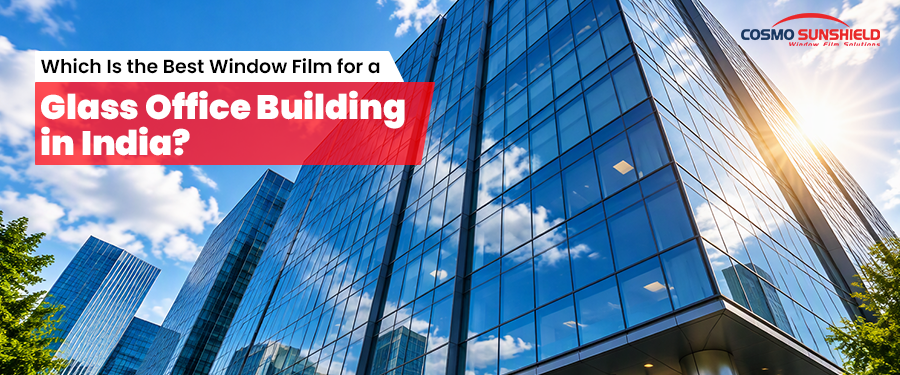
The best window film for a glass office building is usually a spectrally selective or nano ceramic solar control film. It rejects a large share of infrared heat and nearly all UV while keeping interiors bright and the facade clear. The right grade depends on orientation, climate zone, glass type, and the main goal.
Glass facades bring daylight and views, and they also bring solar heat, which makes the glazing a major contributor to cooling load in Indian offices. Replacing glass is slow and costly. Window film is the retrofit route, but it performs well only when the film is matched to the facade, the glass, and the city's climate.
Most selection errors come from choosing by how dark a film looks instead of how it performs. A wrong match shows up in predictable ways: dark floors that push up lighting use, a mirrored exterior the building owner never approved, or a cracked pane from thermal stress.
What Types of Window Film Work for Glass Office Buildings?
Glass office buildings typically use five film families: spectrally selective or nano ceramic, dual-reflective, reflective, safety and security, and privacy or decorative. Solar control films handle heat and glare on exterior glass, while safety, privacy, and decorative films serve entrances, partitions, and meeting rooms. Most buildings combine more than one type.
|
Film
type |
Best
for |
Strengths |
Trade-offs |
|
Spectrally selective or nano ceramic |
Exterior glass and curtain walls |
High infrared and UV rejection, bright
and clear look, no metal so no signal interference |
Premium price tier compared with dyed
films |
|
Dual-reflective |
Facades needing strong heat control with
a moderate mirror effect |
Strong heat rejection, lower exterior
reflectance than fully reflective films |
Cuts more daylight than selective films |
|
Reflective (metallised) |
West-facing, high-sun glass and daytime
privacy |
Very high heat rejection, one-way mirror
look by day |
Mirrored facade, reduced daylight,
reverses at night, may face facade rules |
|
Safety and security |
Lobbies, entrances, ground-floor and
high-rise glass |
Holds broken glass together |
Performance depends on thickness and
frame anchoring |
|
Privacy and decorative |
Cabins, meeting rooms, partitions,
branding |
Frosted, patterned, gradient and blackout
options |
Not meant for whole facades |
Dyed films are a budget option that absorbs heat instead of rejecting it. That raises glass temperature and thermal stress risk, so dyed films are rarely the right choice for large office glazing.
How Do You Choose Window Film by Facade Orientation and Indian Climate Zone?
Choose by the sun each facade receives. West and south glass needs the highest heat rejection, east glass needs strong morning glare control, and north glass often needs only UV and glare control. Climate zone then sets how much heat rejection is worth trading for daylight, from hot and dry Ahmedabad to temperate Bengaluru.
|
Facade |
Exposure |
Film
priority |
Typical
choice |
|
West |
Hottest afternoon sun, highest cooling
load |
Maximum heat rejection |
Nano ceramic high-performance grade, or
dual-reflective where facade rules allow |
|
South |
High sun for much of the year, steady
heat |
Strong heat rejection and UV control |
Spectrally selective |
|
East |
Low-angle morning sun |
Glare control with moderate to high heat
rejection |
Spectrally selective, mid VLT |
|
North |
Mostly diffused light |
UV and glare control, daylight kept |
Light, high-VLT selective film |
India's National Building Code 2016 and ECBC 2017 group cities into five climate zones: hot and dry, warm and humid, composite, temperate, and cold. Four of them cover most office stock.
|
Climate
zone |
Example
cities |
What
it means for film choice |
|
Hot and dry |
Ahmedabad, Jodhpur |
Intense sun and low humidity. High heat
rejection pays off on every sun-facing facade. |
|
Composite |
Delhi NCR, Jaipur |
Hot dry summers, humid monsoon, cool
winters. Balance summer heat rejection with winter daylight, so avoid very
low VLT films. |
|
Warm and humid |
Mumbai, Chennai |
Year-round cooling load and overcast
monsoon months. Choose clear, high-VLT films that reject heat without dimming
floors. |
|
Temperate |
Bengaluru, Pune |
Milder cooling load. Glare control and UV
protection often matter more than maximum heat rejection. |
Cosmo Sunshield uses nanotechnology to filter sunlight, blocking up to 90% of infrared rays and more than 99% of UV rays across its range. For the heat-rejection role on west and south glass, Cosmo Sunshield Nano Ceramic Series is the film to shortlist.
Which Film Fits Which Situation? A Quick Decision Guide
For most glass offices, use a nano ceramic or spectrally selective film on exterior glass, a safety film on lobbies and ground-floor glazing, and frosted or gradient film on meeting rooms. Adjust the heat rejection grade by facade orientation and keep visible light transmission high where daylight and views matter most.
|
Situation |
Recommended
film |
Reason |
|
West or south curtain wall in Ahmedabad,
Delhi NCR or Jaipur |
Nano ceramic or dual-reflective, higher
heat-rejection grade |
Highest cooling load, so heat rejection
matters most |
|
Corner offices with screen glare |
Spectrally selective, mid VLT |
Cuts glare and keeps daylight |
|
North-facing floors |
Light, high-VLT selective film |
UV and glare control without dimming |
|
Mumbai or Chennai tower with overcast
monsoon months |
Clear, high-VLT selective film |
Rejects heat without dim floors on cloudy
days |
|
Facade with reflectivity restrictions |
Non-reflective ceramic film |
No mirror effect and no metal |
|
Lobby, entrances, ground-floor glass |
Safety film, with solar control where
needed |
Holds broken glass together |
|
Meeting rooms, cabins, partitions |
Frosted, patterned or gradient film |
Privacy with daylight |
|
AV rooms, server rooms, storage |
Blackout film |
Complete light and view blocking |
Which Glass Types Can Take Window Films?
Most commercial glass can take window film, but the film must be approved for the specific glass. Annealed, tempered, laminated, and insulated units differ in how they handle the extra heat absorbed by a film. Absorptive films on tinted, thick, or double-glazed glass carry the highest risk of thermal stress cracking or seal failure.
|
Glass
type |
Film
compatibility |
What
to check |
|
Clear annealed |
Compatible with most solar control films |
Thermal stress rises with absorptive
films, so check edge damage and shading |
|
Tinted or heat-absorbing |
Needs checking |
The glass already absorbs heat, so added
film raises temperature further |
|
Tempered |
Generally more tolerant of thermal stress |
Spontaneous breakage can still occur, so
safety film adds protection |
|
Laminated |
Compatible with most films |
Follow manufacturer guidance on
interlayer and edges |
|
Insulated (double-glazed) unit |
Approved films only |
Seal failure risk |
|
Low-E coated |
Approved films only |
Coating position changes heat absorption |
A reputable installer provides a written thermal stress assessment and confirms the film is approved for the glass before work starts. Glass and film warranty terms can depend on that approval.
How Do You Read a Window Film Spec Sheet?
Read four numbers together: visible light transmission (VLT) for brightness, total solar energy rejected (TSER) for heat, solar heat gain coefficient (SHGC) for the glass and film as a system, and UV rejection for fading and skin protection. No single number tells the full story. Compare films on the same glass, tested the same way.
|
Metric |
What
it tells you |
What
to look for |
|
VLT |
Share of visible light passing through |
Higher means a brighter floor. Set it by
facade and task. |
|
TSER |
Share of total solar energy blocked |
Higher means more heat rejected. Compare
films at the same VLT. |
|
SHGC |
Fraction of solar heat entering through
glass and film |
Lower means less heat gain. Relevant to
energy code assessments such as ECBC. |
|
UV rejection |
Share of UV blocked |
Most quality solar control films block
nearly all UV. |
|
Glare reduction |
Drop in brightness at the work surface |
Read together with VLT, especially for
screen-heavy floors. |
Two films with the same VLT can differ widely in TSER, and that gap is where spectrally selective and ceramic films justify their price. Ask which glass the published figures were measured on, since results on clear glass differ from results on tinted or double-glazed units.
How Much Can Window Film Save on Cooling Costs?
Savings depend on the facade's sun exposure, glass area, glass type, film performance, and how the building is cooled. West and south glass in hot cities gives the strongest return. An energy consultant can estimate savings for a specific building, and payback is best judged facade by facade instead of for the whole building.
Factors that decide the return:
• Facade orientation and the share of glazing in the envelope
• Glass type and existing coatings
• Film TSER and SHGC at the chosen VLT
• The cooling system and the hours the building operates
• City and climate zone
Phase the project. Start with west and south floors, measure the change in cooling demand and occupant complaints, then extend to the remaining facades.
ECBC 2017 sets envelope requirements by climate zone, including limits on the solar heat gain of glazing. Film can improve the effective performance of existing glass, though code compliance and green building credits under systems such as IGBC, GRIHA and LEED depend on a full assessment of the building. Share the film's tested SHGC and VLT figures with the energy consultant early.
What Else Does Window Film Do in an Office? Glare, Privacy and Facade Safety
Beyond heat, window film reduces screen glare, adds privacy to meeting rooms, protects interiors from UV fading, and holds broken glass in place. Safety film also addresses a risk specific to tall glass buildings: toughened glass can break spontaneously, and film keeps the fragments from falling.
Glare and screen comfort. Spectrally selective and mid-VLT films reduce the brightness that washes out monitors. Occupants stop closing blinds, so daylight stays in use.
Privacy zones. Frosted films blur detail while passing daylight. Gradient and banded designs keep the upper glass clear and block views at eye level. Blackout films suit AV, server, and storage rooms. One-way mirror films give daytime privacy only, since the effect reverses at night when interior lights are brighter than the outside.
UV protection. Quality solar control films block the vast majority of UV, which slows fading of flooring, furniture, and fittings.
Safety and facade protection. Large glass facades carry a risk that is easy to overlook. Toughened glass can break spontaneously, for reasons such as edge damage or nickel sulfide inclusions, and a broken pane can drop fragments onto people below. India's National Building Code 2016 covers glass and glazing safety in Part 6, Section 8. Safety film holds broken glass together so that a cracked pane stays in the frame instead of falling. Cosmo Sunshield Safety Film is available up to 11 mil thick and suits lobbies, ground-floor glazing, and glass above public areas. Safety film does not make glass unbreakable and is not bulletproof. Performance depends on film thickness, the glass, and how the film is anchored to the frame.
What Mistakes Should You Avoid When Choosing Window Films?
The costliest mistakes are choosing by darkness or price alone, skipping the glass compatibility check, ignoring facade reflectivity rules, using one-way mirror film where night privacy matters, and hiring an installer without manufacturer approval. Each one is avoidable with a site survey and a written specification.
• Choosing by darkness or price alone. Darker film does not mean better heat rejection. Compare TSER and SHGC at the same VLT.
• Skipping the glass check. Absorptive film on the wrong glass can crack panes or fail insulated unit seals.
• Ignoring facade rules. Highly reflective film can breach lease terms, developer guidelines, or local rules. Confirm approvals before ordering.
• Using one-way mirror film for night privacy. The effect reverses after dark. Use frosted or blackout film where privacy must hold around the clock.
• Treating all floors the same. West and south floors justify a higher-grade film than north floors.
• Hiring without manufacturer approval. Installer approval often decides warranty coverage.
• Skipping the mock-up. Judge colour, brightness, and reflectivity on a real pane in daylight.
How Is Window Film Installed in an Occupied Office Building?

Most film is applied on the interior face of the glass, so offices stay occupied during installation. Work is usually phased by floor or zone and often scheduled after hours. Exterior application, used in selected cases, needs rope access or suspended cradles, which adds planning and safety requirements.
1. Site survey. Identify the glass type on each facade, measure panes, and check access.
2. Specification. Match the film grade to each facade and zone, with a thermal stress assessment where needed.
3. Mock-up. Apply sample film to one pane per facade and review it in daylight.
4. Phased installation. Work floor by floor or zone by zone, often after hours.
5. Application. Glass is cleaned; film is applied wet, squeegeed, and trimmed at the edges.
6. Curing and handover. Minor haze or moisture pockets can remain for days to weeks. Clean with a soft cloth and an ammonia-free cleaner.
FAQs About Window Film for Glass Office Buildings
1. What Is the Best Window Film for a Glass Office Building?
A spectrally selective or nano ceramic film is the best all-round choice for most glass office buildings. It rejects infrared heat and UV while keeping daylight and the facade's appearance. West and south glass in hot cities may justify a higher heat-rejection grade, and lobbies need a safety film.
2. Does Window Film Reduce AC Costs in an Office Building?
Yes, solar control film lowers cooling demand by cutting solar heat gain through glass. The saving depends on orientation, glass area, film performance, and how the building is cooled. An energy consultant can estimate it facade by facade.
3. Will Window Film Make an Office Too Dark?
No, not when the film is chosen correctly. Spectrally selective and ceramic films reject heat without relying on darkness, so high-VLT options keep floors bright. Check a mock-up on one pane before approving the full order.
4. Can Window Film Be Applied to Double-Glazed or Low-E Glass?
Yes, but only with a film approved for that glass. Insulated units carry seal failure risk, and low-E coatings alter heat absorption. Request a written thermal stress assessment before installation.
5. Which Window Film Is Best for West-Facing Glass?
A high heat-rejection nano ceramic or dual-reflective film is best for west-facing glass. West facades take the hottest afternoon sun and the highest cooling load. Choose a non-reflective ceramic grade where reflectivity is restricted.
6. Is Reflective Window Film Allowed on Office Buildings?
It depends on lease terms, developer facade guidelines, and local rules. Reflective films give strong heat rejection and daytime privacy, but they create a mirrored exterior. Confirm approvals before ordering.
7. How Long Does Commercial Window Film Last?
Quality commercial film lasts for many years, and warranty terms define the expected life. Orientation, climate, glass type, and installation quality all affect longevity. Compare warranty coverage, including labour, before choosing.
8. Can Window Film Be Installed While Employees Are Working?
Yes, installation is usually phased to keep disruption minimal. Most film is applied on the interior face of the glass. Work is often scheduled after hours or floor by floor.
9. Does Window Film Block UV Rays?
Yes, quality solar control films block the vast majority of UV rays, commonly above 99%. That slows fading of furniture, flooring, and fittings. Check the stated UV rejection on the data sheet.
10. Does Window Film Affect Mobile and Wi-Fi Signals?
Metal-free ceramic films do not interfere with signals, while metallised films can weaken them. Ceramic films suit offices where mobile coverage matters. Ask the supplier to confirm the film construction.
11. Can Window Film Be Removed Later?
Yes, professional installers can remove most commercial films without damaging the glass. Removal suits tenant changes, rebranding, and film upgrades. Older film can take longer to remove.
12. Does Window Film Stop Glass from Breaking?
No, safety film holds broken glass together but does not prevent breakage. It reduces the risk of falling fragments. Performance depends on film thickness, glass type, and frame anchoring.
13. Does Window Film Help with Green Building Ratings?
It can support credits by lowering cooling demand and improving glare comfort. Rating systems such as IGBC, GRIHA, and LEED assess the whole building, so involve the energy consultant early.
14. Is Window Film Better Than Replacing the Glass?
For most retrofits, film is faster, less disruptive, and lower in cost than glass replacement. Replacement still makes sense where panes are failing or a different glazing specification is required. Film cannot repair damaged glass or failed seals.
15. Choose the Right Film for Your Building
Share the facade orientation, glass type, and city with the Cosmo Sunshield team through cosmoconsumer.com to get a film recommendation for your office glass.