Paint Protection Film
Nano Ceramic Coating for Cars in India: What It Is, How It Works?
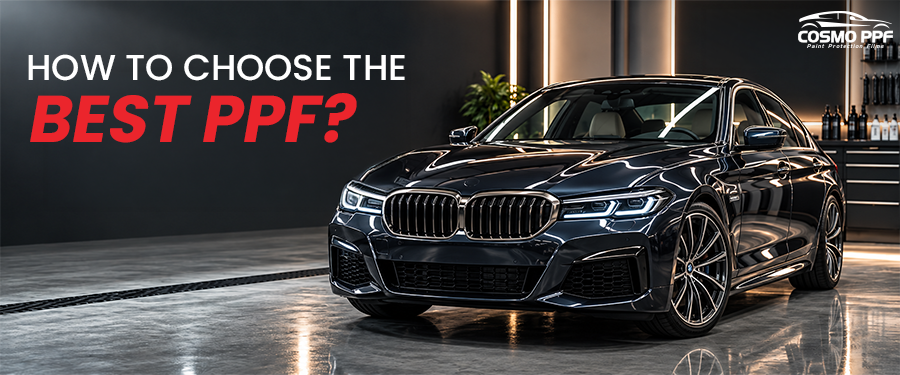
The best PPF is a TPU film of proven thickness, backed by a written manufacturer warranty, and installed by a trained studio that uses genuine film. Compare material, micron thickness, self-healing, UV resistance and warranty terms first, then judge the installer on process, paperwork and past work before you agree to any quote.
Choosing PPF is a two-part decision that most buyers treat as one. The film decides how much protection a car receives on paper, and the installer decides how much of that protection actually reaches the paint. Indian conditions such as strong sun, dust, monsoon water and crowded parking put pressure on both parts.
Contents
What Makes a PPF the Best Choice for Your Car?
Choosing the best PPF for your car starts with understanding the protection you need and the film's ability to deliver it. TPU films are worth prioritising for their flexibility, clarity and self-healing properties. Compare the film's thickness, resistance to UV exposure and stains, and warranty coverage before making a decision. Just as importantly, check the installer's preparation process, cutting method and application standards, as these directly affect the finish and long-term performance of the film.
Usage should shape the shortlist before any brand or price enters the picture.
Types of PPF Compared: PVC, TPH and TPU

PPF is available in PVC, TPH, TPU and polycarbonate-TPU constructions. TPU is the most widely preferred material for flexibility, clarity and self-healing, TPH sits below it on longevity, and PVC is the most basic option. Polycarbonate-TPU is a specialist construction for specific high-impact needs.
|
Material |
Flexibility on curves |
Self-healing |
Clarity over time |
Warranty length |
Best suited for |
|
PVC |
Low, stiffer on curved panels |
Not typical |
Prone to yellowing and hardening |
Shortest |
Flat panels, short-term needs |
|
TPH |
Moderate |
Limited |
Can lose clarity sooner than TPU |
Moderate |
Tight budgets with realistic
expectations |
|
TPU |
High, conforms to complex curves |
Yes, light scratches recover with
heat |
Stays clear and resists yellowing |
Longest |
Daily drivers, new cars, long-term
ownership |
|
Polycarbonate
+ TPU |
Lower, rigid layer added |
Depends on the top layer |
High clarity |
Varies by maker |
Niche, high-impact use cases |
Properties vary by manufacturer, so treat the table as a general guide and confirm details on the product data sheet.
A deeper material breakdown is available in TPU vs TPH vs Polycarbonate + TPU: Which Film Is Right for Your Car.
Gloss, Matte and Coloured PPF: Which Finish Should You Pick?

Gloss PPF keeps the factory look and suits most cars. Matte PPF turns a glossy paint finish into a satin one and also protects factory matte paint. Coloured and black films change the shade of the car. Finish changes appearance only, so protection should still be judged on material, thickness and warranty.
Full Body vs Partial Coverage: How Much Does the Car Need?

Coverage should follow exposure. Front-end kits protect the bonnet, bumper, fenders and mirrors, where stone chips land most often. Partial packages add high-contact panels, while full body coverage protects every painted panel. Choose the level that fits how long the car will be kept and where it is driven.
The full comparison is covered in Full Body vs Partial PPF Installation.
How to Compare PPF Films Side by Side?
Compare films on the same eight points: material, thickness, self-healing, hydrophobic and stain resistance, UV resistance, clarity, adhesive quality and warranty terms.
|
What to compare |
What to look for |
Why it matters |
|
Material |
TPU, confirmed by a data sheet |
Decides flexibility and how the film
ages |
|
Thickness |
Stated in microns or mils (one mil
is about 25 microns) |
Thickness contributes to the
physical barrier between the paint and external contact, but impact
performance also depends on the film's material, construction and formulation |
|
Self-healing |
A top coat that recovers light
swirls with heat from sun or warm water |
Keeps the surface smooth over years |
|
Hydrophobic and stain resistance |
Water beads and slides off |
Makes washing easier and resists
bird droppings and hard water marks |
|
UV resistance |
Stated resistance to yellowing |
Indian sun degrades weaker films
quickly |
|
Clarity |
No haze, minimal orange peel |
A good film should be nearly
invisible |
|
Adhesive |
Clean removal without residue |
Protects the paint when the film is
eventually removed |
|
Warranty |
Written, manufacturer-backed,
covering yellowing, cracking, peeling and bubbling |
Shows how much the maker stands
behind the film |
Why Cosmo PPF Platinum Fits This Checklist?
Using the checklist above, here is how Cosmo PPF Platinum compares against each criterion.

|
Checklist point |
Cosmo PPF Platinum |
|
Material |
TPU |
|
Thickness |
210 micron |
|
Self-healing |
Yes |
|
Hydrophobic behaviour |
Yes |
|
UV and chemical resistance |
Yes |
|
Warranty |
Lifetime warranty |
Coverage can be matched to the car and the budget, from a front-end kit to a full body installation. Details are available on the Cosmo PPF product page.
Why the Installer Matters as Much as the Film?
Film performance depends on surface preparation, accurate cutting, clean edges and a controlled bay. A strong film installed in a dusty garage or cut by hand on the paint can still fail early. Choose the studio with the same care as the film.
Unusually low quotations deserve a closer look. Verify that the quoted product is used on every covered panel and that surface preparation, installation and warranty registration are included. The questions in the next section confirm each point.
What to Ask a Detailing Studio Before Booking PPF?
Ask the studio which exact film it will use, who makes it, how long the warranty runs and who installs it. Request to see the roll or packaging, proof of past work on similar cars, and a written quote listing the coverage. Clear answers signal a reliable studio.
1. Which film and product range will go on my car?
Get the product name, material and thickness in writing.
2. Can I see the roll or box?
Genuine film carries manufacturer labels and batch details.
3. Who backs the warranty and what does it cover?
Confirm it comes from the film maker, covers yellowing, cracking, peeling and bubbling, and is registered against your car.
4. Is the pattern software-cut or hand-cut on the car?
Software-cut patterns reduce the chance of blade contact with paint.
5. What preparation happens first?
Expect washing, decontamination and an honest assessment of paint condition.
6. Where will the installation take place?
An enclosed, dust-controlled bay is the standard to look for.
7. Who will install the film and how experienced are they?
Trained installers working on genuine film produce more consistent results.
8. How are edges, door cups and curves handled?
Ask to see finished edges on a completed car.
9. How long will the car stay, and what is the aftercare routine?
Follow the film maker's guidance on cure time and the first wash.
10. What happens if a defect appears?
A studio should state its rework policy before the job begins.
Red Flags of Cheap PPF and Poor Installation
A very low quote, an unnamed film and missing warranty paperwork are the clearest signs to verify further before booking. Poor installation shows up at delivery as bubbles, dust specks under the film, lifted edges and a hazy or orange-peel surface.
|
Warning sign |
What to verify |
|
Price far below other quotes for the
same coverage |
The quoted film is used on every
covered panel, and preparation, installation and warranty registration are
included |
|
Studio does not name the brand or
product |
The exact product name, material and
thickness, in writing |
|
No written warranty or manufacturer
paperwork |
Who issues the warranty and what it
covers |
|
Cutting directly on painted panels |
How the pattern is cut and how the
paint is protected |
|
Dust specks, fingerprints or bubbles
under the film |
Bay conditions and preparation steps |
|
Lifted, uneven or visible edges |
Edge wrapping method and rework
policy |
|
Hazy surface or orange-peel texture |
Film clarity specification and a
sample on a panel |
|
Yellow tint within months |
Warranty coverage for yellowing and
the film's UV resistance |
Inspect the car at delivery in daylight, check every edge and door jamb, and raise any defect before leaving the studio.
Where to Get Genuine Cosmo PPF Done: 4C Cosmo Car Care Centre?

The 4C Cosmo Car Care Centre is Cosmo's own professional service network for paint protection film, window film, ceramic coating and detailing. Genuine Cosmo PPF is installed by trained professionals using advanced application techniques, which removes the guesswork of choosing the film and the studio separately.
The network began in Pune and is expanding across key automotive markets in India. The nearest centre can be found on cosmoconsumer.com. Studios outside the network that offer Cosmo PPF should be confirmed with Cosmo Consumer before booking.
How to Find a Nearby Studio and Get a Paint Protection Film Quote Online?
Share the car make and model, preferred coverage and city through the Cosmo Consumer website to receive a quote and the nearest 4C Cosmo Car Care Centre or authorised studio. Compare every quote on film name, coverage, warranty and inclusions rather than on the bottom-line figure alone.
How to Choose the Best Paint Protection Film Frequently Asked Questions
1. Which type of PPF is best for cars in India?
TPU is the best choice for most cars in India. It offers the flexibility to fit curved panels, stays clear in strong sun, supports self-healing and carries the longest warranties. TPH and PVC are lower-cost options with shorter lifespans.
2. How can I tell whether PPF is genuine?
Verify the product name, manufacturer labels and warranty paperwork before installation. Ask to see the roll or packaging and request the warranty documents in writing, registered against the car.
3. What thickness of PPF is best?
A thickness of around 200 microns or more is generally preferred for most cars. Construction quality matters as much as thickness, so compare thickness together with material, self-healing and warranty.
4. Is TPU better than TPH PPF?
Yes, TPU is generally better than TPH for flexibility, long-term clarity and warranty length. TPH can suit tight budgets, but its performance usually declines sooner under heat and UV exposure.
5. Is PPF worth it for a new car?
Yes, a new car benefits most from early PPF. Applying film before daily driving begins protects fresh paint from the first stone chips, scratches and stains, and supports resale value.
6. How long does PPF last?
Quality TPU film lasts many years with proper care, and the warranty period shows the maker's confidence. Longevity depends on film quality, installation standard, climate and maintenance habits.
7. Can any detailing studio install PPF?
Judge each studio on preparation, cutting method, bay conditions, warranty paperAny studio can offer PPF, but results depend on training, process and the film used. work and completed work.
8. What should I ask before getting PPF installed?
Ask which film is used, who backs the warranty, how it is cut, where it is installed and what happens if a defect appears. The ten questions in the studio checklist above cover each point.
9. What are the signs of a bad PPF installation?
Bubbles, dust specks, lifted edges, visible seams and a hazy surface are the main signs. Yellowing within months points to weak film. Raise any defect at delivery, before leaving the studio.
10. Can cheap PPF damage paint?
It can. Poor adhesive, poor preparation or blade contact during cutting can leave residue, lifting or marks, and removal of a failed film can risk paint on poorly prepared panels.
11. Is gloss or matte PPF better?
Neither is better for protection. The choice is about appearance. Gloss preserves the factory look, while matte creates a satin finish and needs a care routine that avoids polishing and wax.
12. Where can I get genuine Cosmo PPF installed and request a quote?
Genuine Cosmo PPF is installed at the 4C Cosmo Car Care Centre and through authorised studios. A quote and the nearest location can be requested through the Cosmo Consumer website by sharing the car details and city.
The Right Film Plus the Right Studio
The best PPF pairs a TPU film that has verified specifications and a written warranty with an installer who follows a clean process and provides honest paperwork.
To see Cosmo PPF Platinum options, find the nearest 4C Cosmo Car Care Centre or request a quote, visit cosmoconsumer.com.