Window Film
Commercial vs Residential Window Film: What Is the Difference?

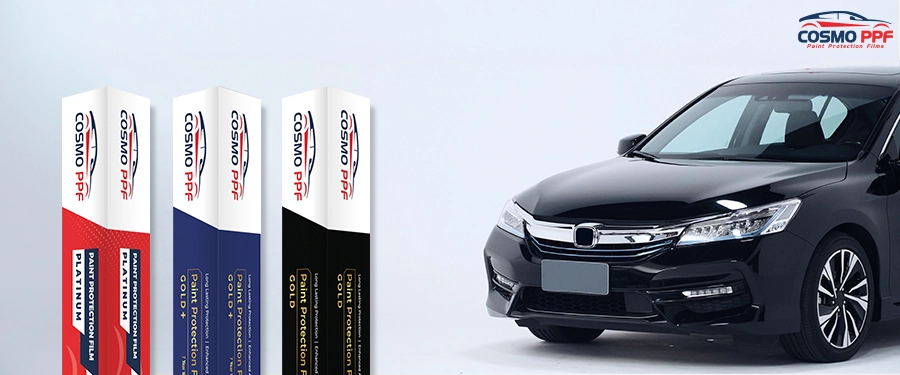
The best paint protection film is a self-healing TPU film that is thick enough to absorb stone chips, finished with a hydrophobic top coat, stable under UV, backed by a clear warranty and installed by a certified professional. Cosmo PPF meets every one of these checks, and Cosmo PPF Platinum pairs 210 micron TPU with a lifetime warranty.
Most people shop for paint protection film the way they shop for a phone cover: by price and by whichever name sounds familiar. That habit explains why two cars that both have "PPF" can look completely different after three years. One still wears a clear, glossy skin. The other has yellow edges, lifted corners and a film that stopped healing long ago. The film itself is rarely the whole story. Construction, installation and the paperwork behind both decide the result.
Contents
What Makes a Paint Protection Film the Best?
A paint protection film is judged on seven things: material, thickness, self-healing ability, top coat, clarity, UV stability and warranty. A film that performs well on all seven keeps paint glossy, resists chips and stains, and does not yellow, crack or peel through years of Indian sun, dust and monsoon.
For a deeper comparison of film materials, read the full guide on TPU vs TPH vs polycarbonate TPU (/blog/tpu-vs-tph-vs-polycarbonate-tpu-which-film-is-right-for-your-car).

Why Cosmo PPF Meets These Criteria
Cosmo PPF is built on self-healing TPU with a hydrophobic top coat. It protects paint against chips, scratches, stains and UV, and it is applied by trained professionals. Each criterion above can be checked against a real Cosmo specification.
The range is covered in full further down this page, so the focus here stays on what the film does for your paint.
Which Coverage Level Do You Need?
Coverage depends on how the car is used. A front kit protects the panels that take the most impact, half body adds the roof and mirrors, and full body covers every painted panel. Highway drivers and new-car owners usually gain the most from the front kit or beyond.
For a detailed breakdown, read the guide to full body and partial PPF installation (/blog/choose-full-body-and-partial-PPF-installation).
Why Installation Quality Matters as Much as the Film?
Even the best film fails if it is installed badly. Surface preparation, precision cutting, clean edge wrapping and a controlled environment decide whether the film lasts. Always choose a certified installer, because a flawless film with a careless install will lift, trap dust or show seams within months.
Cosmo PPF is applied by certified installers trained on Cosmo products.
How to Spot Fake or Low-Grade Film?
Warning signs include a quote far below market, no authenticity details, no warranty card, an orange-peel texture and early yellowing. Always ask for product proof and warranty paperwork before booking, because genuine film should come with a traceable batch and written terms.
Before paying, ask the installer for the product name, the warranty card and the batch details. A genuine installer will answer without hesitation.
How Much Does Paint Protection Film Cost in India?
Cost depends on car size, coverage level and film grade. Partial coverage starts at around ₹15,000, while full-body installations typically run from ₹60,000 to ₹3 lakh and above. Hatchbacks sit at the lower end, and large SUVs and luxury cars at the upper end.
Spread over the life of the film, the cost per year is small next to a single repaint or panel respray. For exact figures by car segment, see the Cosmo PPF price guide (/blog/how-much-does-ppf-coverage-cost).
When Is PPF Not Worth It?
PPF is not worth it on cars with damaged or poorly repainted panels, or on cars about to be sold within a short time. Film cannot repair existing paint defects, so peeling clear coat or rust will show through or lift the film.
For a new car, a car you plan to keep, or a car where resale value matters, PPF is one of the strongest protection investments available.
The Cosmo PPF Range

Cosmo PPF is available in several variants, each with its own warranty and finish. Every variant is listed below with a short description of what it offers.
210 micron TPU film with a lifetime warranty. Built for owners who want long-term, full-confidence protection on a car they plan to keep.
Cosmo PPF Gold+
TPU film with a 7-year warranty, available in Matte and Black variants. Suited to owners who want a distinctive finish along with long-term protection.
TPU film with a warranty of up to 5 years. Suited to owners who want dependable protection over a defined ownership period.
Cosmo PPF Gold Matte
A matte-finish TPU PPF designed for owners who want paint protection with a refined, non-glossy appearance. It combines self-healing performance and a hydrophobic surface with a distinctive matte finish and comes with a 5-year warranty.
Cosmo PPF Gold Black
A black-finish TPU PPF for owners looking to give their vehicle a bold new appearance while adding a layer of paint protection. It features self-healing performance, a hydrophobic surface and comes with a 5-year warranty.
Cosmo PPF Silver
TPU film with a 3-year warranty. Suited to owners who want reliable everyday protection against chips, scratches and stains.
Each variant is installed by certified Cosmo installers. Explore the full range on the Cosmo PPF product page (/cosmoppf/automotive/paint-protection-film), or view the Platinum (/cosmoppf/automotive/paint-protection-film/cosmo-platinum-ppf) and Gold (/cosmoppf/automotive/paint-protection-film/cosmo-gold-ppf) pages directly.
How to Care for Your PPF?
Wash with a pH-neutral shampoo and a soft microfibre mitt, avoid pressure washing close to film edges, and wait 7 days after installation before the first wash. Regular care keeps the film clear, glossy and self-healing for years.
Pair the film with Cosmo Guard (/cosmo-guard) if you also want a ceramic coating on top of your care routine.
Best Paint Protection Film in India FAQs
1. What is the best paint protection film in India?
The best film combines TPU material, adequate thickness, self-healing, a hydrophobic top coat, UV stability and a written warranty. Cosmo PPF meets all of these, with Cosmo PPF Platinum offering 210 micron TPU and a lifetime warranty.
2. How long does paint protection film last?
Lifespan depends on the film grade, installation quality and care. Cosmo PPF warranties range from 3 years up to a lifetime, depending on the variant you choose.
3. Is PPF worth it for a new car?
Yes. A new car has fresh, undamaged paint, so film applied early protects the finish from day one and helps preserve resale value.
4. What is the difference between TPU and PVC film?
TPU is flexible, self-healing and resistant to yellowing. PVC tends to be stiffer and more prone to yellowing and shrinkage over time.
5. Does PPF really self-heal?
Yes. Light scratches and swirl marks in the top coat fade when the film warms up from sunlight or warm water. Deep cuts that pass through the film will not heal.
6. How thick should a good PPF be?
Thicker film absorbs more impact, so thickness should always be stated in microns or mil. Cosmo PPF Platinum runs 210 micron (8.5 mil).
7. Can PPF be applied on an old car?
Yes, if the paint is sound. Peeling lacquer, rust or poor repaint work should be corrected first.
8. How long does installation take?
Installation time depends on coverage. A front kit typically takes less time than a full-body wrap, and the film then needs 24 to 72 hours to cure.
9. When can I wash the car after PPF?
Wait 7 days after installation before the first wash, so the film can set fully.
10. Will PPF yellow over time?
Quality TPU film is designed to resist yellowing. Low-grade film tends to yellow early, which is why material and warranty matter.
11. Does PPF affect the original paint when removed?
Properly applied and removed by a trained installer, the film comes off without harming factory paint. Poor repaints can lift, which is why paint condition matters.
12. Is PPF waterproof and stain-proof?
The hydrophobic top coat repels water, dirt and many stains, so cleaning is easier. Contaminants like bird droppings should still be removed early.
13. Does PPF come with a warranty and what does it cover?
Yes. Cosmo PPF carries a written warranty that varies by variant. Always read the terms on the warranty card for exact coverage.
14. Can PPF be applied on matte or satin paint?
Matte and satin finishes need film made for them. Cosmo PPF Gold+ is available in Matte and Black variants for this purpose.
15. How do I know if my PPF is genuine?
Ask for the product name, batch details and warranty card. A genuine installer will provide these, and an unusually low quote is a warning sign.
16. Does PPF protect against stone chips on highways?
Yes. Film absorbs impact from small stones and road debris, and thicker film absorbs more. Very large or high-speed impacts can still cause damage.
17. Can PPF be applied on a single damaged panel?
Yes, but the panel must be repaired and prepared first. Film placed over damage will not hide or fix it.
18. Where can I get Cosmo PPF installed?
Cosmo PPF is installed by certified installers. Visit cosmoconsumer.com to find an installer near you.