Enquiry
Paint Protection Film

Top Electric Cars Launching in India in 2026: Compare Before You Buy

Top Electric Cars Launching in India in 2026: Compare Before You Buy
Published on : May 22,2026

2026 is shaping up to be the biggest year Indian EVs have ever seen. PM Narendra Modi recently urged Indians to switch to electric vehicles, cut down on petrol consumption, and embrace sustainable energy. EVs are not just relevant because they help control pollution, but also because India spends billions every year importing crude oil, and every EV on the road reduces that burden. It is an economic argument as much as an environmental one.

The numbers back it up. Petrol costs around ₹6–8 per km to run while an EV works out to roughly ₹1–1.5 per km. On a typical monthly commute that is a saving of ₹7,000 to ₹10,000 every single month. Add to that 5% GST on EVs versus 28% on petrol cars, zero road tax in several states, and significantly lower maintenance bills, and switching to electric has never made more financial sense.

What makes 2026 different is the sheer range of options finally available. Whether your budget is ₹10 lakh or ₹40 lakh, there is a strong EV Car launching this year that is worth waiting for. 

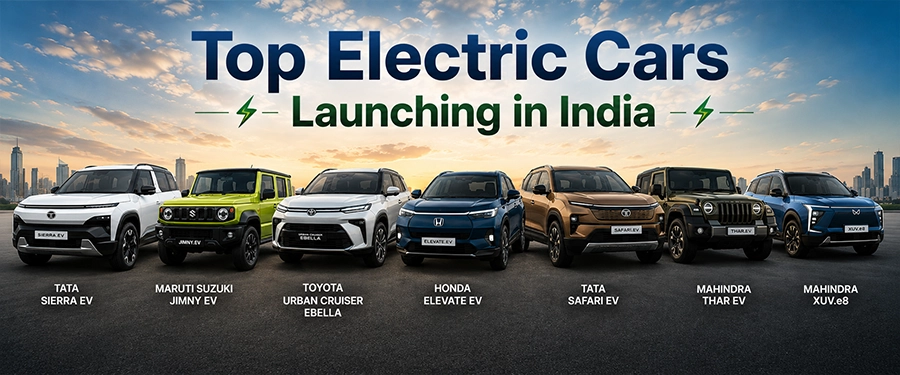
Below is the List of Top Upcoming Electric Cars India in 2026

Car Model

Segment

Powertrain

Battery

Expected Price

Key Features

Tata Sierra EV

SUV

Electric


65–75 kWh

₹15 Lakh

Level 2 ADAS

Maruti Suzuki
Jimny EV

SUV

Electric

40–50 kWh

₹18 Lakh

Electric AWD Capability

Toyota Urban Cruiser Ebella

SUV

Electric

49 | 61 kWh

₹16–21 Lakh

ADAS LEVEL 2

Honda Elevate EV

SUV

Electric

40-50 kWh

₹18 Lakh

Honda Sensing ADAS

Tata Safari EV

SUV

Electric

75 kWh

₹32 Lakh

Panoramic sunroof

Mahindra Thar EV

SUV

Electric

75 kWh

₹25 Lakh

Electric Off-Road Torque

Mahindra XUV.e8

SUV

Electric

60 kWh - 80kWh

₹30–35 Lakh

Triple Screen Cockpit

Let’s get the Detail Overview of the EV Car Price, Features, Launch date & Price so you can Choose according to your Budget

1. Tata Sierra EV 

             Expected Price: ₹15 Lakh

                    Expected Launch: Mid 2026

The Sierra nameplate is coming back and this time it is fully electric. Tata has built it on a dedicated electric architecture rather than converting an existing petrol platform, which gives it better interior space and a more stable drive overall. The design mixes the original Sierra's upright SUV character with modern EV styling, and it works surprisingly well.

white Tata Sierra EV

Design and Exterior

  • Closed grille with connected LED light bar
  • Flush door handles and upright SUV stance
  • Retro-meets-modern silhouette

Interior and Features

  • Wide triple-screen dashboard setup
  • Panoramic sunroof
  • Ventilated front seats
  • Wireless Android Auto and Apple CarPlay
  • Wireless charging pad
  • 360-degree camera system

Performance and Safety

  • 65-75 kWh battery with instant torque delivery
  • Level 2 ADAS
  • Multiple airbags and electronic stability systems

Who should wait for it: Anyone who wants a lifestyle SUV with genuine tech and a design that stands apart from the usual EV crowd. At Rs 15 lakh, there is not much competition in 2026.

2. Maruti Suzuki Jimny EV

                Expected Price: ₹18 Lakh

           Expected Launch: Nov 10 2026

Maruti is taking the Jimny electric and keeping everything that made it popular. The boxy shape stays, the ladder-frame chassis stays, and the off-road intent stays. What changes is the powertrain, and for off-roading that is actually a good thing. Instant electric torque at low speeds is exactly what rough terrain needs, and the dual-motor AWD setup adds real grip on loose surfaces.

Black Maruti Suzuki Jimny EV

Design and Capability

  • Iconic boxy design with compact proportions
  • Ladder-frame chassis for serious off-road use
  • High ground clearance with all-terrain readiness
  • Dual-motor AWD for better traction on rough surfaces

Interior and Features

  • Touchscreen infotainment system
  • Digital instrument cluster with EV-specific data
  • Android Auto and Apple CarPlay

Safety

  • Multiple airbags
  • Hill assist and traction control
  • Electronic stability control

Who should wait for it: Off-road buyers who want capability without fuel dependency and city buyers who simply want something that looks unlike everything else on the road.

3. Toyota Urban Cruiser Ebella

                           Expected Price: ₹16–21 Lakh

                  Expected Launch: May 2026

Toyota's first proper electric SUV for India comes with two battery options, 49 kWh and 61 kWh, giving buyers a choice based on their typical usage. DC fast charging support gets the battery from 10 to 80 percent in around 45 minutes, so longer trips are much less stressful than with some other EVs in this price range.

White Toyota Urban Cruiser Ebella

Battery and Charging

  • 49 kWh and 61 kWh options
  • DC fast charging: 10-80 percent in approximately 45 minutes
  • Strong real-world range for daily and highway use

Interior and Features

  • Dual-tone finish with soft-touch materials
  • Panoramic sunroof
  • Ventilated seats
  • JBL sound system
  • Wireless charging
  • Ambient lighting
  • Flexible 40:20:40 split-and-sliding rear seats

Safety

  • Level 2 ADAS
  • 7 airbags as standard

Toyota's service network is one of the strongest in the country and that matters when you are buying into a relatively new technology. Ownership confidence beyond the spec sheet is a real part of the value here.

Who should wait for it: Buyers who want solid EV technology backed by a brand they know will be there five years from now.

4. Honda Elevate EV

                 Expected Price: ₹18 Lakh

                       Expected Launch: Late 2026

Honda is converting its popular Elevate into a fully electric SUV and the approach is straightforward. Rather than chasing flashy features, the focus is on usability, ride comfort and everyday reliability. For buyers who found the Elevates petrol version practical and easy to live with, the EV carries that forward with much lower running costs.

Blue Honda Elevate EV

Powertrain

  • 40-50 kWh battery with automatic transmission
  • Regenerative braking for efficient energy recovery

Interior and Features

  • Large touchscreen with clean cabin layout
  • Digital instrument cluster
  • Wireless Android Auto and Apple CarPlay
  • Wireless charging
  • Automatic climate control

Safety

  • Honda Sensing ADAS suite including adaptive cruise control, lane assistance and collision warning
  • Multiple airbags and stability control

Who should wait for it: Buyers who value long-term reliability and comfortable daily driving above everything else. Honda ownership tends to be low on surprises, and that holds real appeal.

5. Mahindra Thar EV (Thar.e)

                       Expected Price: ₹25 Lakh

                  Expected Launch: Aug 2026


An electric Thar is a big moment. Mahindra has built it on the INGLO electric platform and managed to keep the things that define a Thar, including the boxy stance, genuine off-road hardware and that sense that it can handle more than just a clean highway on a weekend. Electric torque suits off-roading well and the dual-motor AWD should make the Thar.e more capable on rough terrain than the petrol version in many situations.

Mahindra Thar EV (Thar.e)

Design
  • Angular body panels with LED lighting
  • High ground clearance with reinforced underbody protection
  • Available in 3-door and 5-door body styles
Performance and Capability
  • Dual-motor AWD for serious traction
  • Multiple terrain modes and off-road assist systems
  • Instant torque for superior low-speed crawling
Interior and Features
  • Digital display with off-road data readout
  • Touchscreen infotainment
  • Connected car technology
Who should wait for it: Off-road buyers who want genuine terrain capability without the fuel costs and also anyone who has always liked the Thar but found petrol running costs hard to justify daily.

6. Tata Safari EV

                            Expected Price: ₹32 Lakh

                    Expected Launch: Nov 2026

The Safari EV is India's first three-row electric SUV from Tata and it is built on the acti.ev+ platform. Standard configuration is expected to be RWD with a dual-motor AWD variant also likely. The multi-link rear suspension setup suggests Tata is serious about ride comfort on long runs, which matters a lot for a seven-seater that families will use for road trips.

Tata Safari EV

Battery and Performance
  • 65-75 kWh battery options
  • Dual-motor AWD option
  • Fast charging up to 100kW DC
  • Multi-link rear suspension for long-journey comfort
Interior and Features
  • 6 or 7-seater layout
  • Panoramic sunroof
  • Ventilated seats
  • Large infotainment screen with digital cluster
  • 360-degree camera system
  • Tata TiDAL connected car architecture
Safety
  • Level 2 ADAS
  • Comprehensive safety package aligned with premium SUV standards
Who should wait for it: Families who need three rows and want a car that can handle a long weekend drive without charging anxiety. The Safari's road presence and practicality translate well into the EV version.

7. Mahindra XUV.e8

                    Expected Price: ₹30–35 Lakh

                   Expected Launch: Late 2026


The XUV.e8 is the electric version of the XUV700 and it is the most tech-forward option in this entire list. Triple-screen cockpit, large battery, dual-motor AWD and Level 2 plus ADAS combine to make it feel properly premium. Mahindra has also ensured fast charging and connected features are properly sorted, so the ownership experience holds up to the spec sheet.

Mahindra XUV.e8

Battery and Performance
  • 60-80 kWh battery options
  • Dual-motor AWD setup
  • Long real-world highway range
Design
  • Futuristic exterior with connected LED lighting
  • Aerodynamically optimized closed grille
  • Spacious 5 or 7-seater layout
Interior and Features
  • Triple-screen dashboard with fully digital cockpit
  • Panoramic sunroof
  • Ventilated seats
  • Premium sound system
  • Wireless connectivity throughout
Safety and Tech
  • Level 2 plus ADAS
  • Advanced safety suite
  • Fast charging with real-time vehicle monitoring and OTA updates
Who should wait for it: Premium EV buyers who want the best cabin tech, the best range and a flagship experience without paying import prices.

Which Upcoming EV Should You Actually Wait For?


EV Car Budget under Rs 10 lakh: 
The Tata Punch EV facelift launched in early 2026 at Rs 9.69 lakh onwards and is genuinely the best electric car under Rs 10 lakh in India today. It gets a refreshed design, a 40-kWh battery with 355 km claimed range, ventilated front seats and DC fast charging. If you are in this budget, stop waiting and buy the Punch EV. Nothing upcoming in 2026 touches it at this price.

EV Car Budget of Rs 10 lakh to Rs 13 lakh: 
The Hyundai Inster is the one to watch here, expected around Rs 12 lakh in mid-2026. It is a compact electric SUV with a 42-49 kWh battery, Level 2 ADAS, 360-degree camera, and a digital cockpit. For buyers who want a Hyundai badge and solid everyday practicality at an affordable price, this is a strong upcoming EV. The Tata Punch EV facelift also stretches into this range at the top end and remains a very safe choice.

EV Car Budget of Rs 13 lakh to Rs 20 lakh: 
This is where upcoming electric cars in India 2026 really deliver. The Maruti e Vitara has already launched at Rs 15.99 lakh onwards and is worth serious consideration right now with its 49 or 61 kWh battery, 440-517 km range and premium interior that genuinely surprised people. 
For buyers still waiting, the Tata Sierra EV at around Rs 15 lakh offers strong design and tech. If Toyota's after-sales network matters more to you, the Urban Cruiser Ebella between Rs 16-21 lakh is equally compelling. The Kia Syros EV is also expected in this bracket at Rs 15-20 lakh with a 42-49 kWh battery and Kia's well-known feature set, making it worth tracking before you decide.

EV Car Budget of Rs 20 lakh to Rs 30 lakh: 
The Mahindra Thar.e at Rs 25 lakh is the standout electric SUV in this bracket and a genuinely exciting upcoming EV. If off-roading interests you even a little, it is hard to argue against. 

EV Car Budget above Rs 30 lakh: 
The choice comes down to the Tata Safari EV for three-row family practicality and the Mahindra XUV.e8 for outright technology and performance. If you regularly travel with six or seven people, the Safari EV's third row is a decisive factor. Buyers with a budget closer to Rs 40-45 lakh should also keep an eye on the Skoda Elroq, expected in late 2026, which brings European engineering and up to 77 kWh battery options to the premium electric SUV segment.

How to Protect your Electric Vehicle this Summer?

With 6 simple tips to keep your electric vehicle efficient through extreme heat:

Summer heat, UV rays and road debris can silently wear down your EV's exterior and affect battery efficiency. PPF creates an invisible armor over your vehicle, shielding the paint from heat, scratches, and oxidation. It also keeps your car cooler, protected and looking showroom-fresh all season long. Cosmo PPF is one of the most trusted, high-performance solutions that comes with a warranty of up to lifetime.

A hot cabin forces your AC to work harder, draining battery range with every trip. Cosmo Sunshield window film blocks up to 95% of heat, rejects 99% of UV rays, and reduces glare. It keeps your cabin cooler from the moment you get in, reducing the AC load and extending your range naturally.

3. Charge Smart 
Heat and charging together are your battery's biggest enemies. Charge during cooler hours, early morning or late night, which can help reduce thermal stress. Use your EV's pre-conditioning feature while still plugged-in to cool the cabin without draining the battery, so every kilometer counts when you hit the road.

4. Check Tyre Pressure Weekly 
Hot roads cause tyre pressure to rise and fluctuate, which directly impacts your EV's range and battery load. A quick weekly check keeps rolling resistance low, your ride safe and your battery working efficiently.

5. Keep the Coolant Fresh 
Your EV's thermal management system works overtime in summer. A neglected coolant system means your battery runs hotter than it should, accelerating wear and reducing lifespan. Get your thermal management system inspected regularly to keep temperatures in check and your battery performing at its best.

6. Update Your Software 
EV manufacturers regularly push OTA updates that include summer-optimized battery profiles, improved thermal controls and efficiency tweaks. Staying current means your vehicle is always running the smartest, most efficient version of itself. It is especially important when the heat is at its peak.

Conclusion
India's EV market in 2026 covers more ground than it ever has. Whether you are shopping at Rs 15 lakh or Rs 35 lakh, there is now a real electric SUV built for Indian roads and Indian budgets in your price range. The Tata Sierra EV, Toyota Urban Cruiser Ebella, Mahindra Thar.e, Tata Safari EV and Mahindra XUV.e8 are not half-measures. These are proper vehicles that can genuinely replace a petrol SUV without feeling like you gave something up.
Decide your budget, shortlist two options, and start preparing early. Think about home charging setup, insurance and paint protection before delivery, not after. The more prepared you go in, the better the ownership experience will be.

Top Electric Cars Launching in India in 2026 FAQs
Q: Which upcoming electric cars are launching in India in 2026?
A: The top upcoming electric cars in India 2026 include the Tata Sierra EV (Rs 15L), Toyota Urban Cruiser Ebella (Rs 16-21L), Maruti Jimny EV (Rs 18L), Honda Elevate EV (Rs 18L), Mahindra Thar.e (Rs 25L), Tata Safari EV (Rs 32L) and Mahindra XUV.e8 (Rs 30-35L).

Q: What is the best upcoming EV to buy in India under Rs 15 lakh in 2026?
A: The Tata Sierra EV is the best upcoming electric car under Rs 15 lakh in 2026. It offers Level 2 ADAS, triple-screen interior, panoramic sunroof and a dedicated EV platform at that price point.

Q: Why did PM Narendra Modi ask Indians to use electric vehicles?
A: PM Modi has pushed for EV adoption to cut India's dependence on imported fuel and reduce the foreign exchange spent on petrol and diesel every year. Electric vehicles run on domestic electricity, which keeps costs lower and energy supply more secure.

Q: Is 2026 a good time to buy an EV in India?
A: Yes. New EV launches in India in 2026 cover every budget from Rs 15 lakh to Rs 35 lakh, GST on electric cars is still 5%, EV charging stations are expanding across cities and running costs are Rs 1-1.5 per km compared to Rs 6-8 per km for petrol.

Q: Which is the most affordable upcoming electric car in India in 2026?
A: The cheapest upcoming electric car in India in 2026 is the Tata Sierra EV at an expected price of Rs 15 lakh, making it the most accessible new EV launch of the year.

Q: What is the expected launch date of Tata Sierra EV?
A: The Tata Sierra EV is expected to launch in early 2026. An official date has not been confirmed yet so it is worth tracking Tata Motors' announcements directly.

Q: Does PPF work on electric cars and which brand works well for Indian conditions?
A: Yes, Paint Protection Film works on all electric cars. For Indian conditions, Cosmo PPF is recommended as it is built to handle UV exposure, monsoon humidity and road debris. Applying PPF at the time of purchase can protect paint and increase resale value over time.