Window Film
Residential Window Film: Types, Benefits and Why Your Home Needs It

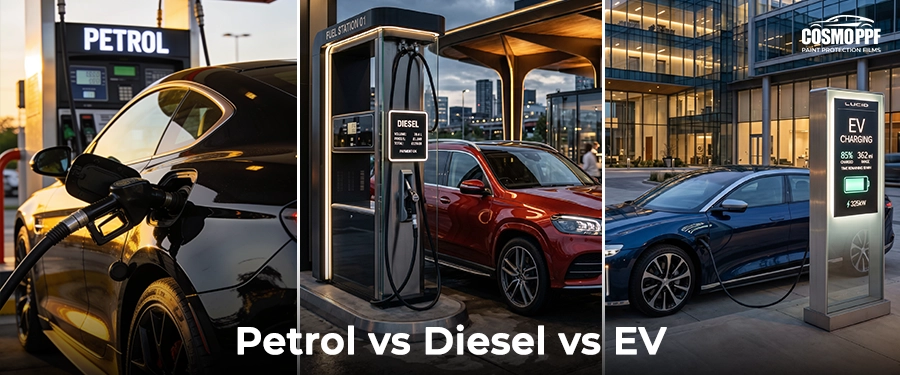
For two decades, buying a car in India came with a simple rule of thumb: petrol for the city, diesel if you clocked serious kilometers. That logic has quietly collapsed. In 2026, a buyer must weigh volatile fuel prices, shifting emission norms, generous electric vehicle subsidies, and a charging network that is still finding its feet. The stakes are real, because the wrong powertrain does not merely disappoint you. It bleeds money every month and punishes you again at resale. This guide cuts through the noise with an honest, India-specific comparison of petrol, diesel, and electric cars, so you can match the right one to how you actually drive.
In This Guide
The Three Powertrains at a Glance
Each powertrain tells a different ownership story, and the smart choice depends entirely on which story fits your life.
|
Factor
|
Petrol
|
Diesel
|
Electric
|
|
Upfront cost
|
Lowest
|
+ ₹1 to 1.5 lakh
|
+ ₹2 to 8 lakhs
|
|
Running cost per km
|
₹6 to 7
|
~₹4.5
|
₹1 to 1.5 (home charge)
|
|
Maintenance
|
Low
|
Highest
|
Lowest
|
|
Refuel / recharge
|
3 min at any pump
|
3 min at any pump
|
Home: 6 to 10 hrs; fast charger: 40 to 60 min
|
|
Best suited to
|
Low-mileage city use
|
High highway mileage
|
High mileage with home charging
|

Servicing costs differ because the engineering differs.
One caveat sits years away: an EV battery carries about an eight-year warranty, but a replacement after that can cost several lakh rupees, an expense petrol and diesel owners never face.
Convenience is where petrol and diesel retain a clear advantage. Both refuel in about three minutes at any station, with diesel offering the longest range at 700 to 900 kilometers per tank. An electric car provides a real-world range of 300 to 500 kilometers, after which it needs six to ten hours on a home charger or 40 to 60 minutes on a DC fast charger to reach 80 percent. Home charging removes this inconvenience for everyday use, but long highway journeys still require planning, and those without access to a dedicated charging point will find an EV difficult to live with.
Strip away the noise and the decision narrows to four questions: how far you drive, where you park, how often you hit the highway, and which city you call home.
|
Your situation
|
The smart choice
|
|
Low annual mileage, mostly city (under 10,000 km)
|
Petrol
|
|
Moderate mileage with home charging
|
Electric
|
|
Heavy highway driving (25,000 km and above)
|
Diesel or long-range EV
|
|
No home charging point
|
Petrol
|
|
Planning 10-plus years in Delhi NCR
|
Petrol or Electric, not diesel
|
|
Lowest maintenance, premium feel
|
Electric
|
|
Want efficiency without the charging hassle
|
Hybrid
|
In summary, petrol suits the occasional, low-maintenance driver, diesel benefits those who cover long highway distances, and electric makes the strongest case for high-mileage city owners who can charge at home and want the lowest running costs going forward.
Whichever powertrain you choose, one fact applies to all three. From the moment you leave the showroom, your car's paint begins to suffer wear. Stone chips on the highway, bird droppings that mark the clear coat, ultraviolet rays that fade the color, and the grime of the monsoon all gradually affect the finish you paid a premium for. As noted earlier, paint conditions are one of the few resale factors within your control.
This is where PaintProtection Film
proves valuable. It is a nearly invisible layer applied over the factory paint that absorbs everyday damage, so that the paint beneath remains protected.
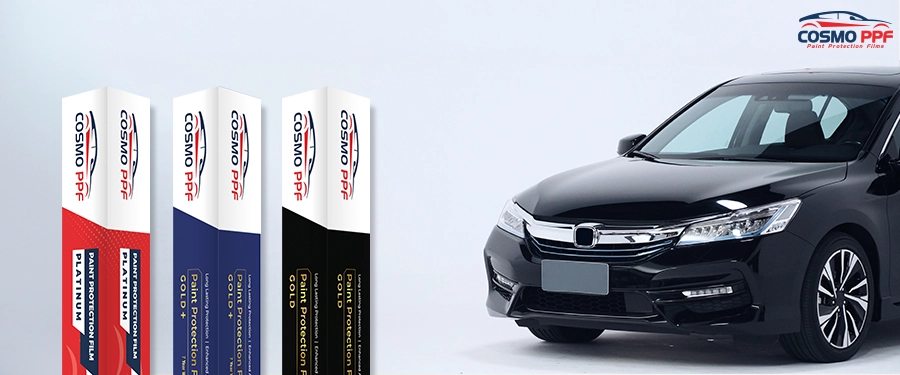
Cosmo PPF is developed specifically for Indian conditions. Its aliphatic TPU film resists yellowing, repairs minor scratches through a self-healing topcoat, and is suitable for both two-wheelers and four-wheelers. The lifetime warranty on its Platinum range is more than a specification. It reflects the manufacturer's confidence in the product, as a company willing to support a film for its lifetime is indicating how well it expects that film to perform over time. Whether you choose petrol, diesel, or electric, protecting the paint is among the most sensible and cost-effective ways to preserve your car's long-term value.
There is no single best car in 2026, only the one best suited to your circumstances. Petrol favors the occasional driver, diesel the long-distance traveler, and electric the high-mileage city owner with home charging. Assess your own driving before making a decision, and whichever car you choose, remember that the value you retain at resale begins with the surface that everyone notices first.
1. Which is cheaper to run, petrol, diesel, or electric?
Electric, by a wide margin. Charged at home, an EV costs roughly ₹1 to ₹1.5 per kilometer, compared with about ₹4.5 for diesel and ₹6 to ₹7 for petrol.
2. Is paint protection film worth it for a new car in India?
Yes. PPF guards the paint against stone chips, UV fading, and pollution, helping preserve both appearance and resale value, which is one of the few resale factors an owner can directly control.
3. Is a diesel car still worth buying in India in 2026?
Only for high mileage. Diesel's fuel economy justifies its higher price and servicing costs above roughly 20,000 to 25,000 km a year. Below that, petrol is usually the smarter buy, and diesel also faces resale pressure from the ten-year ban in Delhi NCR.
4. Do electric cars have poor resale value?
At present, yes. EVs retain around 35 to 45 percent of their value over five years, against 48 to 55 percent for petrol, mainly due to battery-health concerns among used-car buyers. This is expected to improve as the market matures.
5. Which car is best for long highway drives?
Petrol and diesel remain more convenient for frequent long-distance travel, refuelling in minutes almost anywhere. A long-range EV is viable but requires charging stops and route planning.
6. Does paint protection film really affect resale value?
Yes. A clean, chip-free, unfaded finish signals a well-kept car and commands a stronger resale price. Since paint condition is one of the few factors an owner fully controls, protecting it is a direct investment in the car's future value.
7. Which paint protection film offers a lifetime warranty in India?
Cosmo PPF's Platinum range offers a lifetime warranty covering non-yellowing and scratch resistance, reflecting the manufacturer's confidence in the film.